Tuesday, 12 April 2011

Phthalates-Sawapolski

Phthalates-are a group of man-made chemicals that are structurally related to the organic acid, phthalic acid with a chemical formula of C6H4. An example of a formula with phthalates is C6H4(COOCH3)2, which is the formula of dimethyl phthalate. http://www.gasdetection.com/news2/Phthalates.jpg


Properties;
Phthalates are a clear liquid, with a slight odour, has a melting point of -69C and a boiling point of 340C, it is insoluble with water. Phthalates are not flammable, they do not have explosive properties, nor oxidizing properties.


Primary Uses;
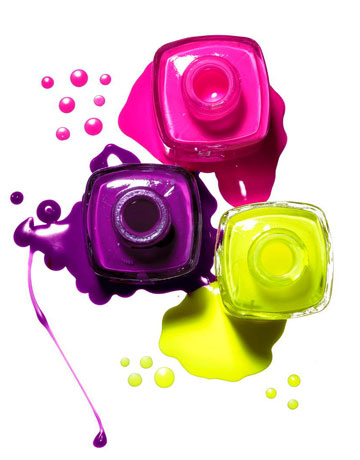
Phthalates are primarily used to make soft and flexible polyvinyl chloride (PVC) for the automotive industry, building and construction material, medical devices and toys. Phthalates are also found in cosmetics because they have to ability to hold colour and scents. They are found in nail polish to prevent chipping as well as being found in insect repellents. Phthalates are mostly found in hair spray, deodorants, plastic softeners and in many other different consumer products.


DANGER!

In animal studies scientists have discovered damage in the liver, kidneys, lungs and reproductive systems. It was also proven that phthalates can be absorbed through the skin or inhaled. Centres for Disease Control and Prevention (CDC) found that 5% of women between age 20 and 40 had up to 45 times more phthalates in their bodies than researchers initially imagined. In 2003, Europe banned phthalates in cosmetics sold. Some studies have shown that children that are exposed to high levels of phthalates may experience developmental delays or reproductive problems. Long term exposures to some types of phthalates can cause cancer. Research also indicates that boys exposed to phthalates may be more likely to develop smaller genitals and incomplete descent of testicles. Boys who are born with undescended testicles are 2-11 times more likely to develop testicular cancer as teenagers or young men. Here is a video link showing more hazards related to phthalates; http://www.cbsnews.com/video/watch/?id=6512528n


Prevention;

Ways to prevent harmful exposure to phthalates includes choosing products that are phthalates low or free and treating those products with phthalates with care. For example; instead of buying vinyl based toys that contain PVC's (a phthalates product) you could buy more organic products. Here is an article that leads you to other preventative techniques, http://www.chemicalbodyburden.org/cs_phthalate.htm


IN CONCLUSION products should NOT have phthalates included because they are destroying not alone the egos of children going through puberty but their chances of living a relatively heathy life. It is causing more risks and is not helping we as people through our every day lives. All in all it is ruining our chances of living our lives relatively free of health issues.

Works Cited:

Joint research centre, JRC. (2003). Green facts: scientific facts on pthalathe. Retrieved from http://www.facebook.com/l.php?u=http%3A%2F%2Fwww.greenfacts.org%2Fen%2Fdbp-dibutyl-phthalate%2Fabout-dbp-dibutyl-phthalate.htm&h=7fd57

Korea, SK. (n.d.). Chemicalland21: dioctyl phthalate. Retrieved from http://chemicalland21.com/industrialchem/plasticizer/DOP.htm

West, LW. (2009). Phthalates in cosmetics: “not too pretty”. About.com, 1

Dr. Ginsberg, GG (Videographer). (2006-2011).How To Avoid Exposure To Dangerous Phthalates In Consumer Products [Web]. Available from http://www.videojug.com/interview/how-to-avoid-exposure-to-dangerous-phthalates-in-consumer-products

Stahl, LS (Videographer). (2010). Phthalates: Are They Safe? [Web]. Available from http://www.cbsnews.com/video/watch/?id=6506618n

Brown, PB, & LastKrennHrubec, KK. (2009, november). Phthalates and children’s products. Retrieved from http://www.stopcancerfund.org/posts/176

PBDE-Loewen-Borremans


PBDE!!
PBDE are used as flame retardants in many commercial products.

Formula:
C12H10-xBrxO


Physical Properties


- solid

-gas


- white


-liquid


-odourless


Chemical Properties

- Non Flammable


-Toxic to animals


-non viscous

PBDEs have been found all around us, in the air, water, and ground.

PBDE's are organo bromine compounds


Found in:
building materials, electronics, furnishings, motor vehicles, airplanes, plastics, polyurethane foams, and textiles, furniture, TV's, stereos, computers, carpet, curtains.

Dangers:
Dangers can come from ingestion of food and by inhalation.
They can bio accumulate in blood, breast milk, and fat tissues.
Damages the nervous and reproductive system

Websites:
http://www.ec.gc.ca/lcpe-cepa/default.asp?lang=En&n=DF7DE982-1&offset=6

Refer to Artical:


http://www.ecoinfo.ec.gc.ca/env_ind/region/toxin_descript/image/PBDE1.gif


Link to video:

http://www.youtube.com/watch?v=FYbbxng5864

Hydroquinone - Wall


http://img1.topfreebiz.com/o2010-9/Hydroquinone-HQ--2841041718.jpg


What It is and
Where it's found


Hydroquinone(C6H6O2) is a chemical used by the industry to manufacture certain products. It has six atoms of Carbon, six atoms of Hydrogen and two atoms of oxygen. It is used in the production of other chemicals. It is used as an additive to heat-shrink tubing, restorative paste and bonding tape; also, it helps develop black and white pictures. It is used in nail-polish, hair-dye and skin- lightening preparations(skin bleaching)Hydroquinone occurs naturally in some foods. It does not, however,
pose any risks to Canadians ("Hydroquinone," 2010).


How It Works

Hydroquinone works by increasing the breakdown of melanosomes. However, Hydroquinone also decreases the production of melanosomes(Ngan, 2010).

Side Effects

Hydroquinone has the potential to be a very harmful chemical. First of all, it can cause a corneal ulceration if it gets into someone's eyes.
If enough -300-500mL- Hydroquinone touches someone's skin, it may cause dermatitis.

If hydroquinone is ingested or inhaled, it may cause respiratory and gastrointestinal irritation, cyanosis, dyspania, haemolytic anemia, convulsions or unconsciousness. Inhaling two-hundred milligrams or more is life threatening.


First Aid Treatments and Safety Precautions

If someone gets hydroquinone in their eyes, they should: rinse/wash their eyes for at least fifteen minutes and consult a physician.
If hydroquinone comes into contact with some one's skin, they should wash their hands immediately with non-abrasive soap. If irritation occurs, consult a physician.
If someone ingests it, they should not induce vomiting. Another person should check their lips and mouth area to make sure that no tissues are damaged. They should loosen tight clothing. Mouth-to-mouth resuscitation may be performed if he/she is not breathing. Seek the advice of a physician immediately.
If someone inhales hydroquinone, they should be brought into a well-ventilated area immediately, tight clothing should be loosened and mouth-to-mouth resuscitation may be performed. Seek medical attention immediately("Hydroquinone msds," 2011).

Do not breathe in hydroquinone. Store in a cool area.


Physical Properties

State- Solid crystals
Colour- White
Odour- Odourless
Boiling Point-
286 degrees Celsius
Melting Point- 170-174 degrees Celsius
("Hydroquinone msds," 2011)

Ch
emical Properties


Slightly combustible when preheated
Slightly explosive when exposed to heat.
Reactive at high temperatures
("Hydroquinone msds," 2011)

Videos

"Dermatology and Skin Diseases: What is Hydroquinone?"
www.youtube.com/watch?v=fv4ZjmC7Cr0

___________________________________________________________________

Hydroquinone is a very dangerous chemical and should not be put into any substances. First of all, hydroquinone may cause cyanosis. Cyanosis is caused by a lack of oxygen in the blood. It turns the skin and mucous membranes blue. It may lead to death. Furthermore, Hydroquinone may also cause Hemolytic anemia. Hemolytic anemia is an ailment in which the red blood cells are being extirpated faster than the bone marrow can produce them. Finally, if someone accidentally inhales two-hundred milligrams or more, they may die. Therefore, Hydroquinone is a very dangerous chemical and putting it in substances should be illegal because of the diseases that it is liable to cause.


Works Cited


Hydroquinone. (2010, February 22). Retrieved from http://www.chemicalsubstanceschimiques.gc.ca/challenge-defi/summary-sommaire/batch-lot-1/123-31-9-eng.php

Hydroquinone msds. (2010, November 10). Retrieved from http://www.sciencelab.com/msds.php?msdsId=9927544

Ngan, V. (2010, August 28). Hydroquinone(bleaching cream). Retrieved from http://www.dermnet.org.nz/treatments/hydroquinone.html


Monday, 11 April 2011

FORMALDEHYDE - ROBINSON - PLAQUET


Some physical properties of FORMALDEHYDE are:


* clear & colourless


* strong smelling, pungent gas


*soluble in water at room temperature


*boiling point of 96 degrees Celsius


*melting point of -15 degrees Celsius


Some chemical properties of FORMALDEHYDE are:


* flammable (combustibility)


* highly reactive with acids


* reactive with other substances such as amonia, oxides, anhydrides


http://www.gasdetection.com/news2/formaldehyde.jpg


Description of FORMALDEHYDE


Formaldehyde is a chemical used for many purposes. It has a very strong odour that may cause your eyes to burn in the process of smelling it. It is a colourless gas at room temperature and can be reactive with acids and other substances. It is used in household products as well as in the environment. It can be both harmful and useful in daily life. The chemical formula for formaldehyde is CH2O. (US National Cancer)


Common uses and products FORMALDEHYDE can be found in


There are many products Formaldehyde can be found in. Some of those include everyday household products, particleboard, plywood, fiberboard and other pressed-wood products, glues, adhesives, paper product coatings, insulation materials, fungicide, germicide and disinfectant, tobacco smoke and nail polish. It is also used as a preservative in mortuaries and medical labs. Although it is often processed in man-made products such as normal house hold cleaning products, it is also found in nature. Formaldehyde is produced in small amounts by most living organisms as regular metabolic processes. (US National Cancer)


http://www.greenchicafe.com/wp-content/uploads/particleboard.jpg


DANGERS AND PRECAUTIONS


Although Formaldehyde can be useful for many things, there are many dangers and risks that come with a certain amount of exposure to this poison. Some of these include Formaldehyde poisoning, skin, eye and throat irritation, it can affect the upper respiratory tract, and you can even have an increased risk to getting certain cancers such as leukemia, brain cancer, hematopoietic and lymphatic, lung cancer and brain cancer. Some ways to reduce these health risks are to buy products that contain less formaldehyde such as using exterior-grade pressed wood products. Another way to reduce formaldehyde exposure is to make sure your ventilation is adequate, live in lower humidity levels and keep a moderate temperature in your home. (US National Cancer)


http://www.roamingtimes.com/environment/images/formaldehyde.gif


TREATMENT


If you get formaldehyde poisoning, a doctor will prescribe medications and drugs to treat it. If exposure makes your eyes, throat, or skin irritated, the best thing to do is get fresh air or rinse yourself. If exposure from formaldehyde has lead to something more serious like cancer, then the patient should probably go to cancer treatments and therapies. ("Formaldehyde poisoning symptoms," )


Our opinion on whether Formaldehyde should be banned or not is clearly going to be yes, it should be banned because first of all, the health risks are too serious to be ignored and also, there are safer alternatives that can be used instead of formaldehyde in the majority of the products it's found in. Instead of risking your health by using products that we need to build or that we clean with, people can start using less harmful chemicals. Formaldehyde is more harmful than helpful when put into products, although we cannot do anything about it when it's found in nature because it isn't mixed with a bunch of other chemicals or products. Like a wild animal, we should leave formaldehyde to do it's natural processes instead of causing health problems in our homes.


RESOURCES:


* US National Cancer Institute, (n.d.). Retrieved from http://www.cancer.gov/cancertopics/factsheet/Risk/formaldehyde


* Formaldehyde poisoning symptoms. (n.d.). Retrieved from http://lifestyle.iloveindia.com/lounge/formaldehyde-poisoning-symptoms-8802.html


Oxybenzone - Bridgman - Neufeld

What is Oxybenzone??

Oxybenzone forms "colourless crystals" that are soluable. It is commonly used in cosmetics, especially sunscreen, moisturizers and lip balm. It is used in sunscreen because it absorbs UVA and UVB rays. (Wikipedia, 2011)


Hazards and Dangers in Oxybenzone.

This compound has been found in 97% of all American's urine. This chemical is hazardous because it can disrupt hormones and lead to a un-healthy pregnancy. It can cause breast cancer and also cause photo-sensitivity to the skin. (Wikipedia, 2011) Personally, we think that Oxybenzone should not be used in everyday products because it is very un-healthy and dangerous.


Physical properties in Oxybenzone.


- Usually a white or yellowish powder.

- Melting point is 63-65 degrees Celsius.


- Boiling point is 150-160 degrees Celsius.

- It has a weak rose-like smell

- In- soluab
le
(Making Cosmetics, 2007)


Chemical Properties in Oxybenzone.


- The chemical formula for Oxybenzone is C 14, H,12, O3.

- Usually combustible.


- Normally stable under usual circumstances.
(Making Cosmetics, 2007)


Precautions when using Oxybenzone.


- Avoid contact with eyes and mouth.

- Do not inhale.

- Keep out to reach of children.

(Making Cosmetics, 2007)

Treatments.

- If inhaled, call a doctor immediately.

- Rinse off if immediate rash occurs.

Works Cited


Making Cosmetics, . (2007, October 23).
Making cosmetics. Retrieved from http://www.makingcosmetics.com/

Wikipedia, . (2011, April 18).
Oxybenzone. Retrieved from http://en.wikipedia.org/wiki/Oxybenzone


CFCs-Hill-Enns

Chlorofluorocarbons


Once upon a time there was a man named Thomas Midgley, who thought he was doing the world a favour when he invented freon, a non-toxic, non-flammable alternative to chemical compounds such as chloromethane and sulfur dioxide. These chemicals were used as refridgerants but were extremely dangerous. (If you lit a match near your fridge, you would die.)


Freon is a chlorofluorocarbon, or CFC, which means it poses no biological harm to plants or animals, But in 1989 they were banned. Why you may ask? CFCs are a compound of 3 elements: Chlorine, flourine and carbon. When this gas rises into our atmosphere and reaches the ozone layer it is broken down by the sun and is decomposed leaving behind chlorine that deteriorates the ozone layer and allows dangerous UV rays to pass through our atmosphere. This is very basic explanation. in reality there are a few more chemical reactions that occur but are very hard to grasp(unless you're like a total science genius like me)


When released into the air, the CFCs rise through the Earth's lower atmosphere, and up to the second layer. They are then converted by the sun's rays into chlorine compounds that react with the second layer of the atmosphere, turning them into normal oxygen molecules. The suns rays easily penatrate the atmosphere and melt permenant ice and cause the world to slowly warm up.


In my opinion, this is the most dangerous chemical on this blog because it doesn't just affect the people who use it. CFCs affect the whole world, including, plants, animals and people. Other toxins may poison the human body but CFCs poison the earth itself. The use of this product should deffinetely be banned or else we could be destroying the lives of our children's children.


Wednesday, 6 April 2011

Chemical Name - Last name

Chemical Name - Last name

 
You are to title your posts in the same way as you see above.
First the name of the chemical you are researching a hyphen and then your last name.
If you look to the right, there is an archive that will allow you to easily locate your classmates blogs, click on the name of the person's blog you want to check out and it will take you to that blog.  You can then enjoy what they have posted and make  comments. Your comments might be a question to help you understand their content, it might be words of praise, or suggestions for improvement.

Please feel free to edit or update your blog often and please view and comment on as many other blogs as you can!!!

If you have any questions about how to use this site you can either ask me in class or leave a question in a comment box  attached to my first  introductory blog.